Indoor Cat Enrichment: DIY Toys, Play and Home Tips
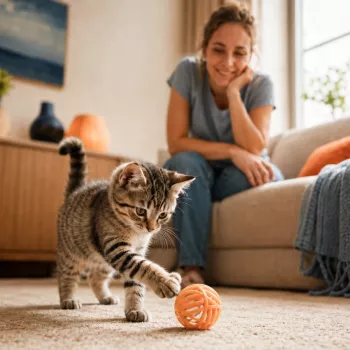
Indoor cats can have engaging days without a room full of expensive equipment. A satisfying routine combines play, exploration, comfortable places to rest, and the freedom to choose when to join in. Even a small change, such as a box to investigate or a few pieces of food to find, can give your cat something interesting to do.
Our printable cat enrichment guide is an accessible starting point when you want fresh ideas. Start with your cat’s interests, introduce one activity at a time, and let their response guide what you try next.
Start with a Routine Your Cat Enjoys
Short, regular play sessions can fit easily into your day. Try offering a session when your cat is naturally alert, then adjust the timing and length according to their energy and interest. A kitten, an older cat, and a cat recovering from an illness may all prefer different kinds of activity.
For interactive play, move a suitable toy in a way that gives your cat opportunities to stalk, chase, and catch it. Let them make successful catches rather than keeping the toy just out of reach. As the session ends, slow the movement and give your cat time to wind down. You can follow play with part of their regular meal if that fits their routine.
Introduce changes gradually. If your cat watches from a distance, that can be a useful first step. Let them walk away whenever they choose, and avoid pushing them toward a toy or into a hiding space. Enrichment should offer opportunities, not obligations.
DIY Toys and Activities to Try
You can begin with items you already have. Roll a paper ball across the floor and see whether your cat wants to chase or bat it. Supervise the game, and pick up any torn pieces before your cat can swallow them.
A clean cardboard box can become a place to investigate or hide. Remove staples and tape, and make sure any openings are large enough for your cat to enter and exit safely without getting stuck. Place the box on the floor where it won’t tip or block a walkway.
For a simple food search, put a few pieces of your cat’s regular food in easy-to-find spots. Start close together so your cat can succeed, then vary the locations if they enjoy the game. Include that food, along with any treats, in their daily portions.
Everyday Enrichment Ideas
| Activity | What it encourages | Safety tip |
|---|---|---|
| Paper ball play | Chasing and batting | Supervise and discard torn pieces |
| Cardboard box exploration | Hiding and investigating | Remove staples and check openings |
| Food search | Sniffing and foraging | Use suitable food and monitor portions |
Inspect toys regularly and remove them if they become damaged. Don’t leave string, ribbons, small detachable parts, or plastic bags within your cat’s reach. Put interactive toys with cords away securely after supervised play.
Make Your Home More Cat-Friendly
Enrichment includes places to observe and rest as well as things to chase. Offer accessible resting spots at different heights, along with a quiet hiding place where your cat can retreat undisturbed. A low shelf, a stable chair, or an open box may suit your space; choose options your cat can reach comfortably.
Put a sturdy scratching surface near a place where your cat already likes to spend time. Some cats prefer a vertical surface, while others use a horizontal one, so observe their habits before choosing. Keep the scratcher stable enough that it won’t slide or tip during use.
A secure window perch can give your cat a view of outdoor activity. Make sure the perch is stable and that windows and screens are safely secured. You can rotate toys and other accessible activities to keep things interesting, but leave favorite resting and scratching spots in place.
For more ideas on meeting indoor cats’ needs, explore the Indoor Cat Initiative and the American Animal Hospital Association’s enrichment guidance.
Use the Printable Guide to Spark New Ideas
Our in-stock printable guide focuses on DIY toys, play routines, and cat-friendly home tips. It’s listed at $6.99 and offers a convenient place to start when you want to make enrichment part of everyday life.
Choose one idea, offer it without pressure, and notice what your cat does. Do they approach quickly, watch from a distance, or return later? Those observations can help you decide whether to repeat the activity, make it easier, or try something different.
If you’re also preparing for a trip, our travel security and scam awareness guide is another resource for your own planning.
Adapt Enrichment to Your Cat
For a cat with limited mobility or lower energy, bring activities within easy reach. A gently rolled paper ball, a low resting spot, or a food search in a small area can be more comfortable than a game that requires jumping. Keep sessions brief and let your cat set the pace.
Compare related options such as Top 10 Must-See U.S. National Parks + Fast Facts | Digital Travel Guide eBook for Nature Lovers, Hikers & Adventure Planners to match features, dimensions, and use case before choosing.
FAQ
How often should an indoor cat play?
Offer short, regular sessions and adjust them to your cat’s age, health, energy, and interest. There is no single schedule that suits every cat.
Can I make cat enrichment toys from household items?
Yes. A paper ball or clean cardboard box can be engaging with supervision; remove small parts and other hazards, and discard damaged items.
What if my cat ignores a new activity?
Try a different activity or offer it at another time of day. Introduce it gradually and let your cat choose whether to participate.











Leave a comment