Cat Body Language Cheat Sheet: A Printable Guide
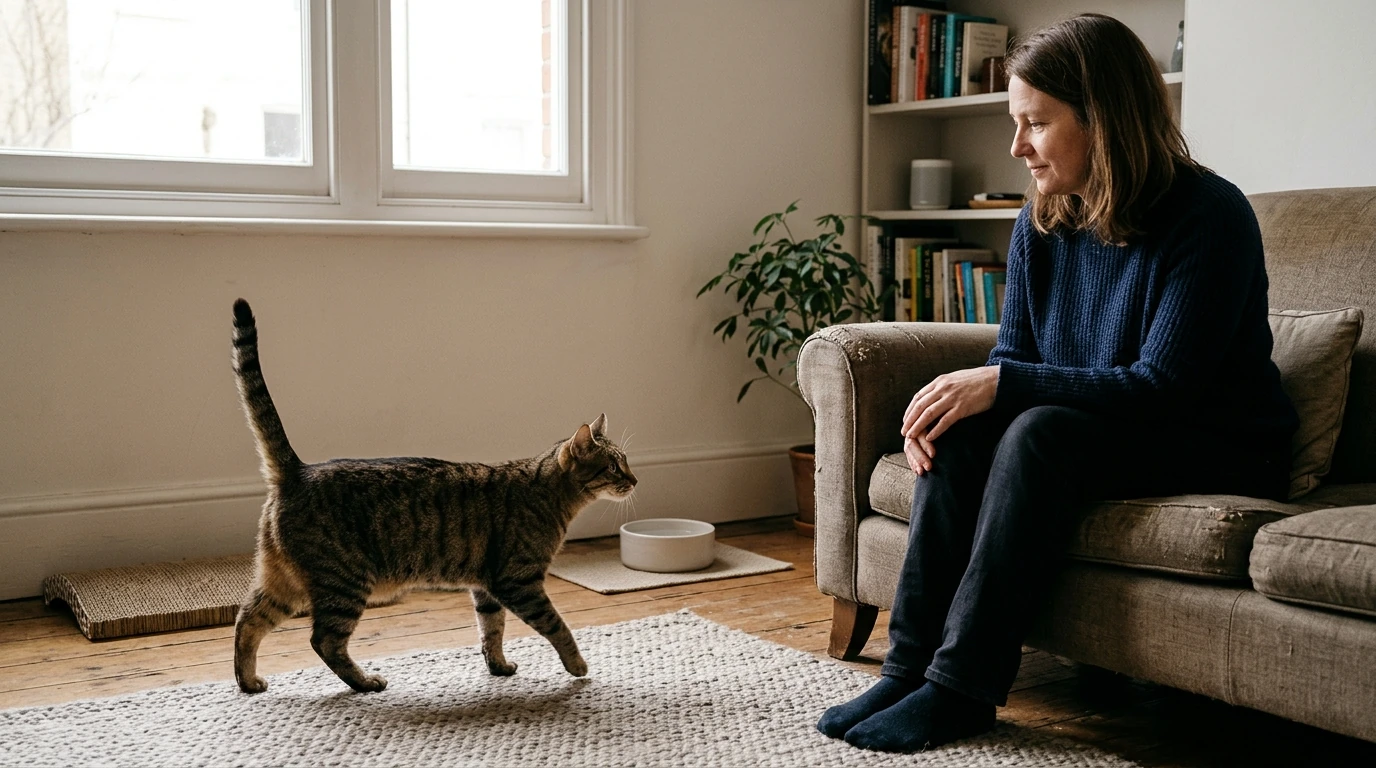
Cats communicate throughout the day, whether they are greeting you at the door, settling beside you, or deciding they have had enough attention. Their posture, movements, and sounds can offer useful clues, but those clues make the most sense when you consider them together.
Our printable cat body language guide gives you an everyday reference as you learn to notice those signals. With a little observation and a gentle response, you can make interactions more comfortable for both you and your cat.
Why Cat Signals Are Best Read Together
A cat’s ears, eyes, tail, body posture, and vocalizations all contribute to the picture. An upright tail may accompany a friendly approach, for example, but a tail on its own cannot tell you everything. Look at the rest of the cat: Is the body loose or stiff? Are the ears in a neutral position or pressed back? Is the cat moving toward you or away?
The setting matters, too. A cat watching birds through a window may be alert and focused without feeling the same way as a cat facing an unfamiliar visitor. Your cat’s usual behavior provides another helpful reference. Some cats are naturally vocal, while others rarely meow.
Rather than assigning a fixed translation to every gesture, pause and look for a combination of signals. If you are unsure, let your cat choose whether to come closer.
A Quick Look at Common Cat Signals
The examples below are a starting point, not a diagnosis or a definitive translation. Each cat is an individual, and a signal may mean different things in different situations. When a cat looks tense or tries to move away, give them room rather than continuing the interaction.
| Signal | Possible meaning | Helpful response |
|---|---|---|
| Upright tail and relaxed body | Often a friendly greeting | Let the cat approach |
| Flattened ears and crouched posture | May indicate fear or discomfort | Give the cat space |
| Tail flicking and tense body | May signal arousal or irritation | Pause interaction and observe |
| Slow blinking with a relaxed body | Can accompany a calm interaction | Respond gently without forcing contact |
| Meowing | Can have different meanings depending on context | Check for needs and observe other signals |
Pay particular attention when several signs point in the same direction. A crouched cat with flattened ears who is also backing away may need a quiet place and a break from interaction. On the other hand, a cat who approaches with a relaxed body may welcome a calm greeting—but it is still wise to let them set the pace.
For more information about feline behavior and care, you can explore resources from International Cat Care.
Using the Printable Guide at Home
Our Cat Body Language & Behavior Cheat Sheet is a handy reference for learning about feline signals, postures, and meows. Keep a printed copy near a familiar cat-care area, such as the place where you store food or grooming supplies, so you can refer to it when a question comes up.
You can also use the guide to start a conversation with other household members. If one person notices that your cat walks away during petting, for example, you can agree to pause sooner and let the cat return on their own. A shared approach can help everyone respond consistently and respectfully.
Notice patterns over time instead of expecting a single gesture to have a fixed meaning. You might observe when your cat tends to meow, what happens just before a tail starts flicking, or which situations lead them to seek a hiding spot. These observations can help you adjust routines and describe changes clearly if you need professional advice.
Responding to Changes in Behavior
If your cat appears frightened or overwhelmed, make the surroundings as calm as you can. Reduce noise and activity, avoid reaching for the cat, and leave a clear escape route to a quiet place. Give them time to settle rather than blocking their path or pulling them out of hiding.
Behavior can also change when a cat is unwell or in pain. Contact your veterinarian if you notice a sudden or persistent change, signs of pain, or anything else that raises a health concern. Observations about when the change began and what you have noticed can help your veterinarian assess the situation. The Cornell Feline Health Center also offers feline health resources.
Our team has the printable Cat Body Language & Behavior Cheat Sheet in stock for $9.99. It is a simple reference to keep close as you practice observing your cat’s everyday communication.
If travel planning is also on your list, our in-stock Travel Security & Scam Awareness Guide is a separate digital handbook for travelers, priced at $10.99.
FAQ
What does a flicking cat tail mean?
A flicking tail can indicate arousal or irritation. Consider your cat’s posture, ears, and surroundings before deciding how to respond.
Can a meow tell me exactly what my cat wants?
Not always. Consider the situation, your cat’s other body signals, and their usual habits to work out what they may need.
When should I ask a veterinarian about my cat’s behavior?
Contact a veterinarian about sudden or persistent behavior changes, signs of pain, or other concerns about your cat’s health.
















Leave a comment